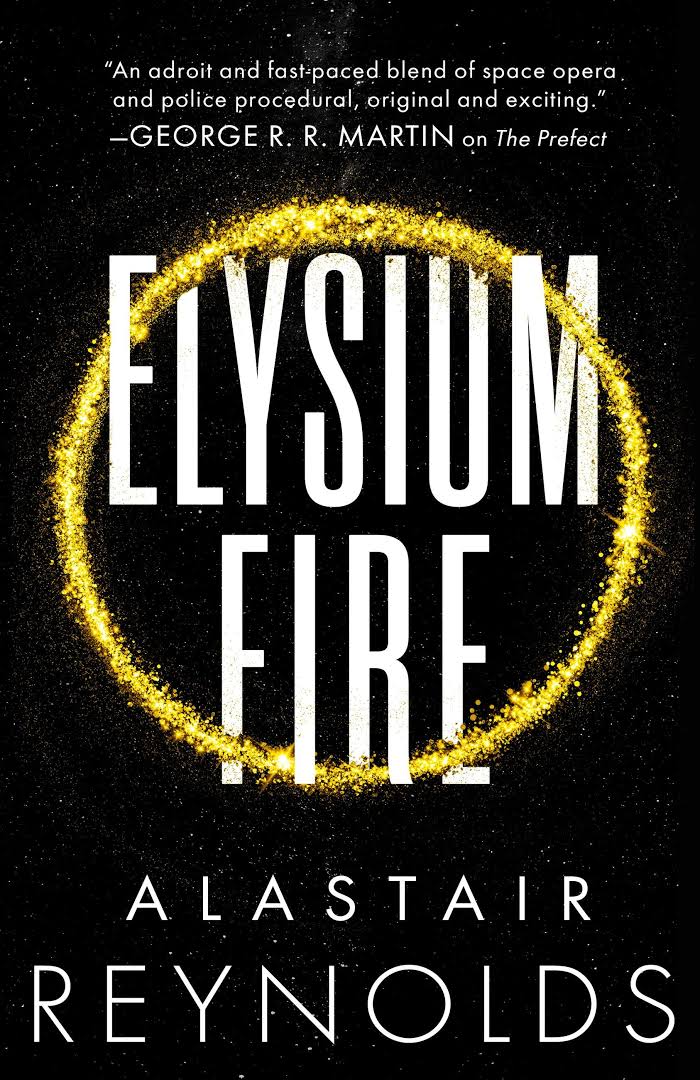
 Prefect Tom Dreyfus, his protégé Thalia Ng, Prefect Sparver (a hyperpig) and others who debuted in The Prefect (2007) return in Alistair Reynolds new book in his Revelation Space universe. Following their adventures stopping an AI from taking control of the Glitter Band, a civilization of orbital habitats managing a pretty good democracy through neural implant consensus, Tom and his colleagues are faced with two new threats to the civilization they are sworn to protect. There’s an influential rabble rouser seeding dissent and urging habitats to secede on the one hand and a mysterious string of deaths spread across the worlds that defies analysis and seems to be increasing exponentially. If the Glitter Band doesn’t dissolve in discontent, it might fail from mass pandemic unless Dreyfus and the agents of Panoply can find out who or what is behind the deaths and restore the public trust.
The Wrong Stars by Tim Pratt
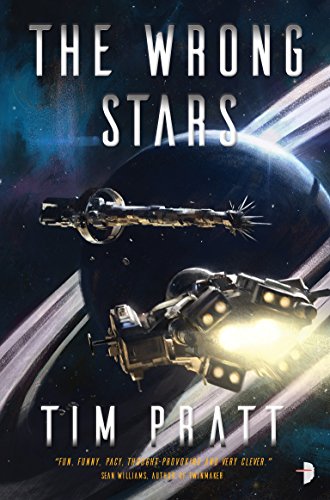 Callie Machedo is the scruffy, emotionally damaged captain of the cargo/gunship White Raven, and when she discovers a derelict human spaceship in trans Neptunian space she doesn’t know if it’s a box that will hold gold or spiders, but she’s not the sort that doesn’t want to find out. The ship shouldn’t be there at all, considering that it left 500 years before to seed a new colony, but its navigation logs show that it reached its destination and jumped back using a drive that nobody has ever seen before, or at least, no human. The alien race that showed up a few centuries after the ship left, bringing wormhole access and other advanced tech may be all too familiar with the technology that allowed the ship to make a point to point jump, and it scares them to the center of their starfish shaped beings. Continue reading
Sue Burke Interview: Semiosis, Spanish SF, and What Comes Next
 SFRevu: How did Semiosis come about? Did it spring from a short story? Did it come before or after your Clarion experience, and what did you think of that?
Sue Burke: It started with real life. A couple of my houseplants got into fights with other houseplants. A pothos wrapped around another plant and killed it, and a philodendron tried to sink its roots into a neighbor. That seemed suspicious, so I did some research and discovered that all plants in a given place are, as one botanist put it, “in a state of war with regard to each other.” (War on my windowsills!) That seemed like a good source of conflict for a story, but how?
Sea of Rust by C. Robert Cargill
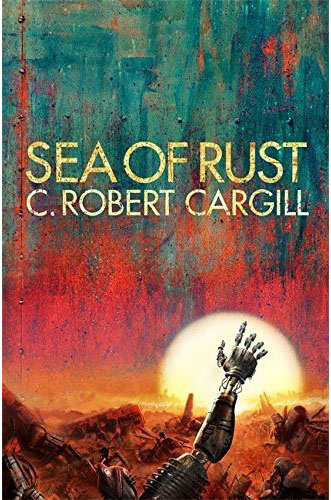 Brittle was a caregiver robot, back when there were humans. Now she’s a scavenger in the Sea of Rust, surviving in a Robotic Mad Max landscape full of failing robots and global AIs seeking to absorb all robot consciousnesses into a single group mind. Worse, the only other caregiver bot needs to scavenge Brittle’s parts to survive, and in a botched attempt to take her down, put Brittle on a path to shutdown. Even though the two robots are locked in a contest to the death for survival, they need to cooperate to escape the coming AI Overlord takeover. Even for robots, the future sucks.
“It’d be great if the humans were still around, you know, if they hadn’t turned out to be such shits in the end.” Continue reading
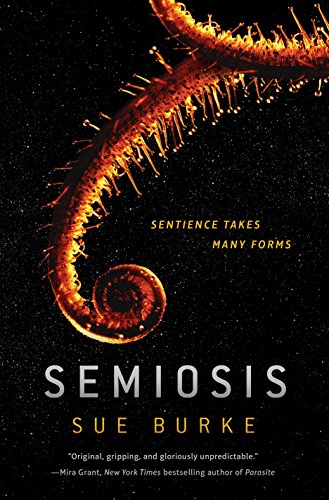
Semiosis by Sue Burke
Publisher:Tor Books (February 6, 2018)
SFRevu Link: http://www.sfrevu.com/php/Review-id.php?id=17715
Semiosis Website: https://semiosispax.com/
Semiosis is Sue Burkes’ debut novel, and it’s quite good. The term refers to the whole communications process between living things, and though it usually refers to intraspecies communication, the author ups the ante here. In Semiosis, colonists from a climate change and war-ravaged Earth must learn to get along with plants with opinions.