In The Feed, we see a world where everyone’s internet connection goes straight into their heads, allowing them to share thoughts, feelings, memories and all. More than that, you can keep yourself backed up continuously, just like you do your computer. And you could always restore your memories if something happened to you. Sound good? But what if someone downloaded their memories into your brain, pushing yours out and taking over? Not good. Worse, what if that happened to lots of people, and the invaders were bent on pulling the plug on our energy-intensive, information-addicted world? Very not good.
The Feed is Nick Clark Windo’s debut novel, and it manages to get in shots on social media, internet addiction, climate change, energy dependence, the blindness of leaders, and the frailty of self, all in one post-apocalyptic trek through the world after the Feed shuts off.
The story picks up six years later with a handful of survivors of the mass die off after the collapse of the tec- dependent infrastructure. Tom and Kate, who’ve been with us since the beginning, are now trying to raise a daughter in a refugee camp built around Kate’s aunt’s old farmhouse, but the going is hard, partly because they’re all suffering from PTSD after having their cyber-world ripped from their heads. Most likely, watching the physical-world fall apart didn’t help. Dependent on the Feed for everything from instant knowledge to their basic memories, they don’t have the skills to cope with this mundane world and the camp is hovering on the verge of failure.
The Feed may be down, but their hardware/wetware is still active, and the threat of waking up a different person hangs over them all. Since people are only “taken” while they’re asleep, no one is supposed to sleep without someone on watch, not to save them, but to keep the body’s new owner from waking up. Good times.
So, it’s a grim, sleep-deprived existence for Tom and Kate, but when their daughter Bea is abducted in a raid, they head into the ruined world to get her back.
As they trek through the debris they uncover clues for the reader, and themselves, as to what happened, why, and most importantly, where the invaders came from.
About halfway through the book I was saying to myself, this isn’t all that much fun, really. I’m not overly fond of the characters, and even if they find Bea, there’s not a lot of hope for anyone’s survival. Then things get twisty, and the story manages to develop some traction, until it comes to an end that’s both satisfying and unsatisfying at the same time, which isn’t a bad trick.
The ideas in The Feed have been floating around in science fiction for a long time. While The Invasion of the Body Snatchers may jump to your mind, my first thought was of Neal Stephenson’s Snowcrash, in which computer viruses were able to jump from the machine to human, offering mind control for those wielding the technology. If you haven’t read it, by the way, I highly recommend it, and understand that Netflix is working on a series…but please go read the book. Neal goes back to the invention of writing for the core of his technology, and he manages to weave some wonderful ideas about Anh Shubs, Sumerian writing, and the nature and origins of consciousness into the story. Windo doesn’t have to work so hard to provide a pathway to the brain, since everyone is wired directly into the Feed, but from a hard science standpoint, it doesn’t hold up as well either. Of course, that’s not the point of the story.
If there is a point, it’s a cautionary tale about the consequences of relying on our technological crutches until they become indispensable, leaving us crippled when they fail. While I take the author’s point, I think he, like many post-apocalyptical writers, oversells the impact of being forced back on our own resources. Billions wiped out through famine, disease, and squabbling over the last Twinkie? I buy that. But those that remain will pick themselves up and carry on. Caution us all you want, but humans are surprisingly resilient. The ultimate resolution of Tom and Kate’s quest shows some of that spirit, as well as the ability to make hard choices when needed, so maybe I’m complaining too much.
Most of those are old questions, but the interesting ones Windo raises are more about identity and experience. What makes us one person and not another, and how mutable is it? Mind uploading and downloading, despite its implausibility, is a favorite concept in science fiction, and its consequences deserve to be examined, if not its methodology. To the author’s credit, he has his character Tom point out early on that “…brains aren’t like hard drives; they can’t be wiped. People can’t be taken over.” Having pointed out that he knows it doesn’t work like that, the author moves on to say, OK, but I’m not here to argue, I’m here to tell a story.
The Feed is being compared to other recent Post-Apocalyptic efforts like Station 11 and The Girl With All The Gifts, and like those authors, Windo leaves the reader a fair amount to think about in his critique of modernity, pointing out that it’s a good thing that we’ll be gone before the bill for our way of life comes due. Except, of course, evidence to the contrary.
Review published 4/1/2018 SFRevu: http://www.sfrevu.com/php/Review-id.php?id=17870
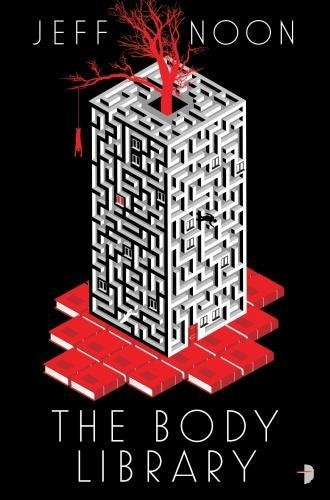 The Body Library is a brilliant piece of writing that does a satisfying job of merging noir, magical realism, and a love of all things literary. John Nyquist, a small town investigator, is back in his second book (following A Man of Shadows), and he’s on a case that started out as a short story, a way to make ends meet, but has quickly become a larger work, one that may draw all the characters in this town into its arc. Once you start it, you’ll find yourself drawn in as well, and you may never look at books the same way again.