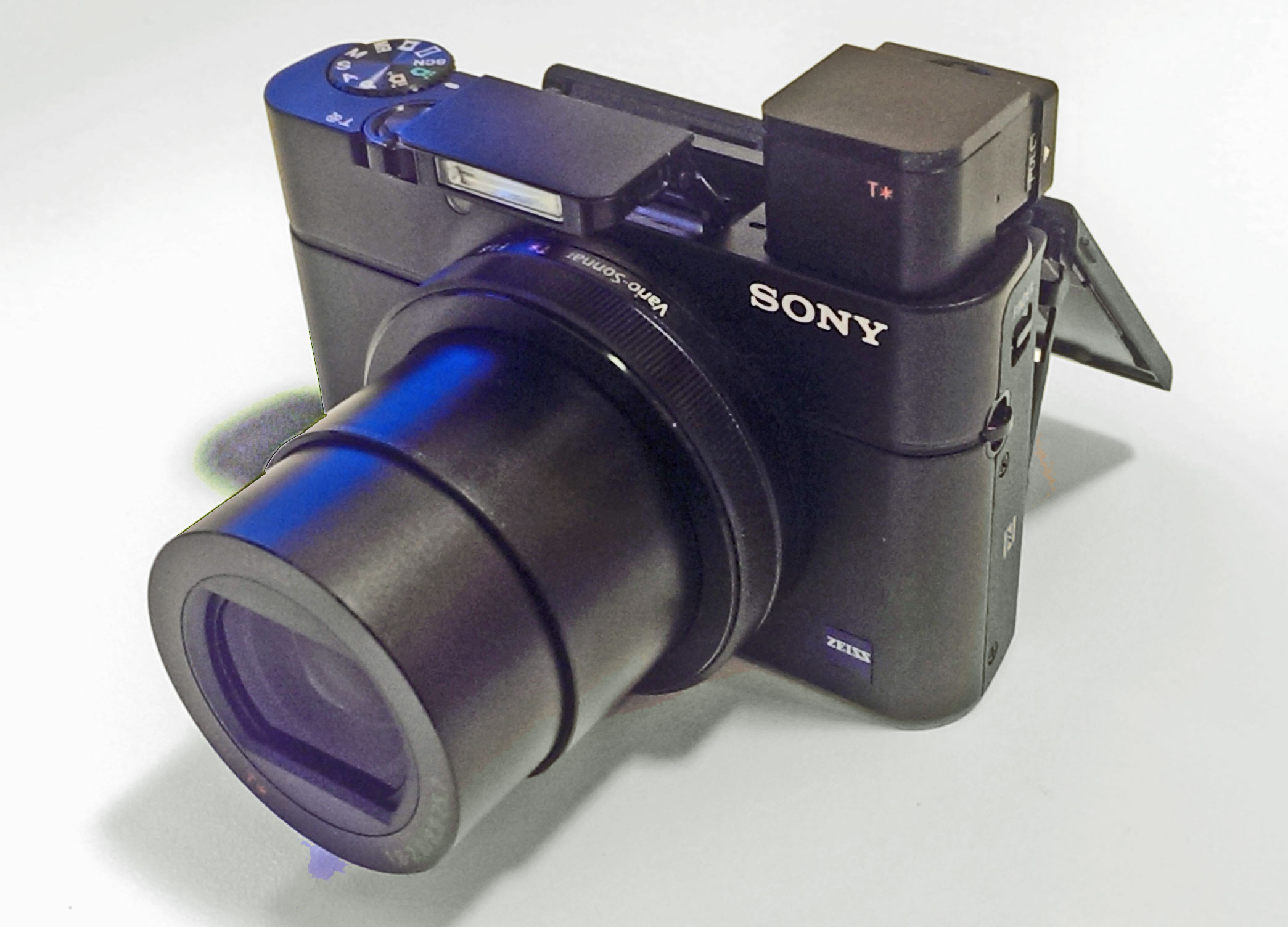
The Sony RX100M III has a full set of bells and whistles, including the first ever pop-up viewfinder. What id doesn’t have is the hot shoe for an external flash that the M II had.
Recently I took a trip to Denmark and Sweden, and while it might not have been a once in a lifetime opportunity, it wasn’t far off. So, the fact that I was between cameras was a bit of an issue. I’d sold off my DSLR and all its bits and pieces and I’ve been waiting with the resulting cash in hand to buy the best small camera with a built in eye-level viewfinder in the world. Just as soon as someone built it.
I was hoping that the soon to be released Sony RX100M III would fill that bill, and already had one on pre-order, but this was nearly a month ago and I needed something for the trip.
So I rented the current model, the RX100M II, from lensrentals.com, took it along, and love it. Now, a few weeks later my RX100mIII has arrived and I’m busy kicking the tires on it to see if the differences really make a difference, and how.
Two Steps Forward:
I’ve tried to be happy with small cameras that didn’t have an eye-level viewfinder, but as soon as the sun comes out I realize it’s not going to happen. Sure, I can more or less aim the camera towards whatever it is I’m shooting, and hope I get something, but hope is not a photographic technique. If the mII had an integrated eyes-level viewfinder, i would have stopped right there. But it didn’t. So I plunked down $800 for the next model, which arrived Friday, 6/20, four days earlier than Amazon predicted.
rx100mIII-lens
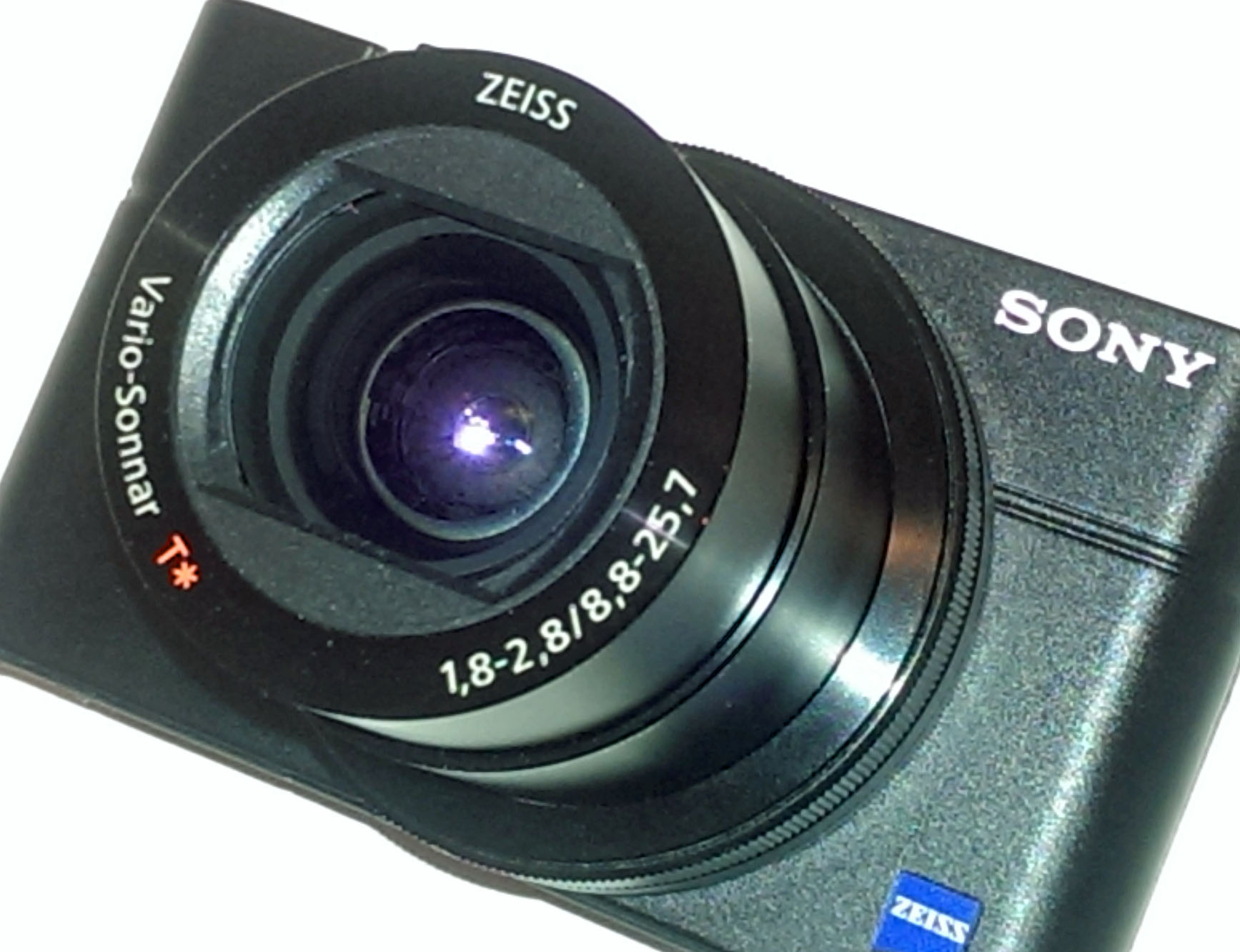
The new ZEISS Vario-Sonnar T* 24-70mm (equiv) lens is wider than the previous version’s 28-100mm (equiv), and faster too, at least at the tele-end. (F1.8-2.8 v f/1.8-4.9), but was that worth the loss of the 100 mm tele?
The RX100mIII has two major improvements over its predecessor, a pop-up eye-level viewfinder, the first of its kind, and a faster, wider angle lens. The previous lens, also by Zeiss, wasn’t bad by any means, matching the new glass at it’s widest (28mm) and adding a bit more on the high end (100mm), but Sony’s correct that photographers often find a wider lens more useful in the field. You can only back up so far, but you can often step forward a bit. The rub is that the “sweet spot” for portraiture is generally considered to be in the 85-135 mm range, which this camera can’t get to. Of course, with its very crisp 20.1 MP sensor, you can crop down to that without hurting yourself noticeably, but if serious portraiture is your thing, this lens isn’t.
The real deal here is that pop-up viewfinder. On the M II you could buy a detachable one that fit into the hot-shoe, but that was awkward at best and absurdly expensive at $449.99 (list). As the M III is about $150 more than the M II, the built in viewfinder is a steal. Typically these little viewfinders aren’t a match in quality for the big LCDs on the back of cameras, but the 0.39″(OLED), with 1,440,000dot resolution, gives it a fair run for its money. It’s a tiny bit awkward to open, as you have to pop it up with a switch on the side, then pull back on its housing to get the lens far enough back from the actual display to be able to focus, but it works pretty well once you’ve done it a few times, and the space saved by not having a big bump on top of the camera is worth it.
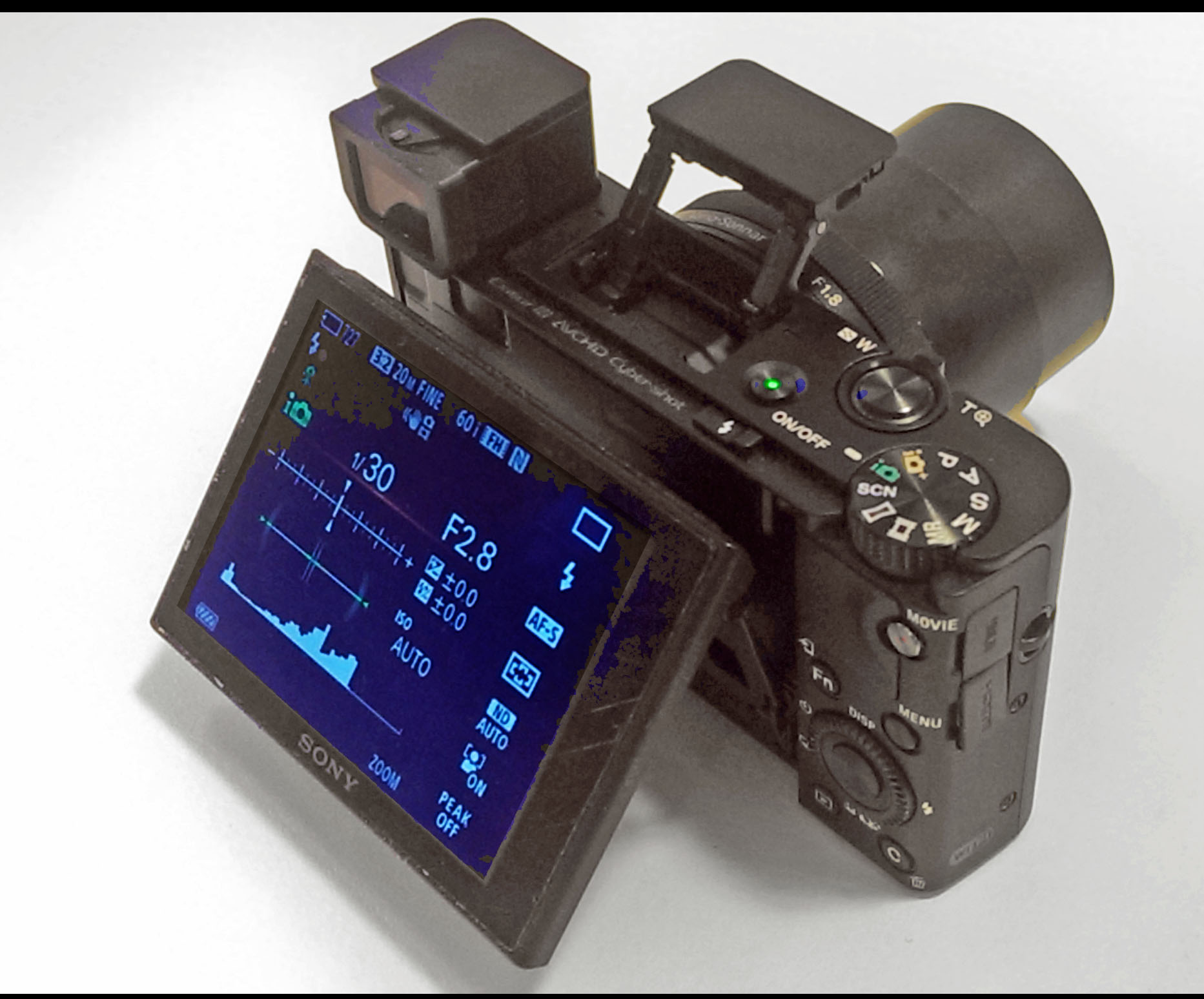 There are numerous other improvements, if not as earthshaking. The rear LCD now swings all the way up to offer a “selfie” mode, a neutral density filter has been added so that the camera could be made more light sensitive but still operate in bright settings. Add to that the already terrific features held over from the II, like WiFi connectivity to computers and smartphones, a selection of two absolutely brilliant auto-setting modes, one to minimize blurring and the other to pick from the arsenal of pre-programmed scenes, the ability to do panorama shots in either landscape or portrait modes, and much, much more. The camera was wonderful and it still is. Except.
One Step Back
The took the hot-shoe off to make room for the flash and the pop-up viewfinder.
Now, it’s true that I might never have gotten around to buying the expensive Sony HVLF60M flash unit (list $549.99), but somehow, knowing that I can’t add an external flash to the camera means that I can’t think of it as pro gear, despite the fact that its image quality meets pretty much any standard you can throw at it. Between the loss of the hot-shoe and the extra 30 mm of focal length, Sony is telling us that this is a camera we should take on travel to catch absolutely beautiful images, but not something we should ever consider waving at a model in a studio. Pity, because otherwise it’s up the task.
Now, the camera has the ability to be triggered by a WiFi controller, and includes both USB and NFC (near field control) connectivity, so Sony (or some enterprising hacker) could conceivably give it the ability to trigger remote flashes. Or you could use the camera’s flash to trigger remotes. Clunky, but doable. There’s not a lot that can be done about wanting a longer lens though.
…Keep Waiting for A Giant Leap For All Camerakind?
So here we are. Sony’s best ever pocket camera in hand and I want it to be better than it is. Unfortunately, that’s not going to happen for the M III, but if there was an M IV being dreamed up, here’s what I’d ask for:
- Put the damn hot-shoe back on, or at least give us a flash sync plug.
- Add a lens filter thread to the front of the lens. Yes, there’s an accesory one, but it’s bulky and far from precisely positioned.
- Make a 1.5 telephoto adapter to go on the filter mount. Presto! You’ve got your 135mm portrait lens. You could also tweak the standrd lens up to 85 mm, but I’m not greedy.
On One Foot and Another
But what about now? Do I keep it and be vaugely annoyed at the flash thing? Well, yes. I’d cheerfully go back to the RX100 m II, except that I know I’d regret it the next time I tried to take a shot in bright sunlight, so I’ll stop whining and buckle down to the serious business of finding great shots. Here, are a few early ones from the camera that you can look over.






Links/References
- DPReview: Sony RX100M III Review 6/23/2014
- Amazon.com: Sony RX100M III /B00K7O2DJU