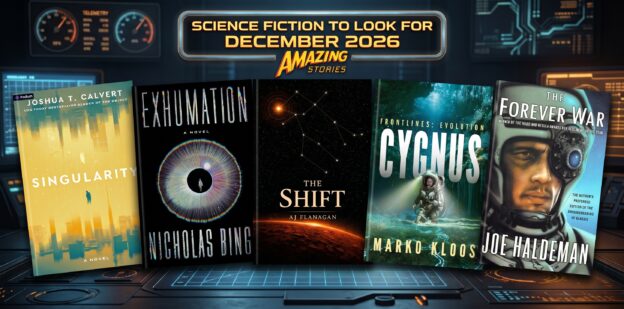
Somehow, themes seem to emerge among the month’s selections, and this month it’s a mix of going underground, missing people, and planes of existence. In Joshua T. Calvert’s Singularity, VR has come very much of age in the not-so-distant future, challenging the reality we think we’re in. In Exhumation by Nicholas Binge, we get a Stross-like intrusion of the underworld into our reality, and both stories share gnarly perspective twists in the process. Marko Kloos’s Cygnus wraps up one of his Frontlines series with more underground action… tunnel crawling to kill massive aliens, and A.J. Flanagan’s brilliant debut novel, The Shift, digs into the red sands of Mars when an alien probe lets Earth know that it’s been measured and found wanting. On top of that, we look back to an award-winning December book from 1974, Joe Haldeman’s The Forever War, and find it holds up well against both current fiction and the classic work it serves as a counterpoint to. Dig in!
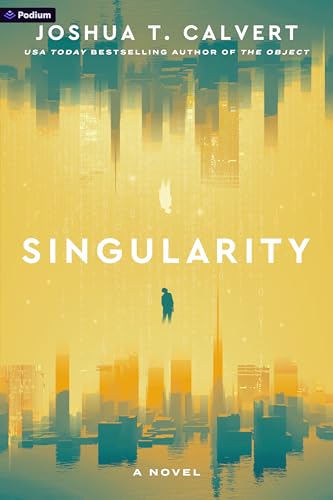
 Singularity: A Novel by Joshua T. Calvert
- Publisher: Podium Publishing
- Release Date: December 1, 2026
- Format: Paperback / eBook (Kindle Unlimited)
- ISBN: 979-8347029990
- Goodreads: Singularity: A Novel – Joshua T Calvert
In his 52nd book, USA Today bestselling author Joshua T. Calvert takes an unflinching look at life, the AIverse, and everything from the economic and ecological collapse of pretty much everything to the mixed dangers of AI and human hubris. Singularity is set toward the end of the century, but it feels much closer in this dark tale of the day after tomorrow.
In what used to be America, humans are either neuro-enhanced narcissists or zeros of no economic value, stuffed onto trains that roam the blighted landscape doing pointless public works projects, chiefly dismantling the ruins of the old world. Meanwhile, an Elon Musk-esque trillionaire mines asteroids and plans a colony on Proxima Centauri, peopled by clones grown there by a probe and educated via a “quantum link” to his hand-selected pioneers back on Earth. As you’ll see in Exhumation, a missing girl sits at the heart of the story: Stewart’s daughter, the architect of the current virtuality, indistinguishable from reality and built on her personality core. In the prologue, she goes missing on a diving trip to a sunken city (thanks, climate change), and Stewart recruits James, one of the non-enhanced humans (and Stewart’s disposable domestic servant), to dive into the VR built from the reality she disappeared in to find her, or at least what happened to her.
The author tackles many real issues, from the economic consequences of AI to fundamental questions about the nature of reality and simulated spaces. Of course, science fiction has been wrestling with these issues since its beginning. Even The Matrix owes a debt to the many stories about simulated reality before it, but Calvert’s take is fresh and unblinking, and his science is excellent throughout. I can’t help but throw in a couple of historical references, though. Calvert’s quantum-linked clones being prepared for their colonization mission light-years from Earth were brilliantly foreseen by Poul Anderson’s “Call Me Joe” (1957)—published in Astounding Science Fiction (which became Analog)—in which a scientist orbiting Jupiter projects his consciousness into an engineered being on the planet’s surface. And when it comes to the dangers of an AIverse, we owe a nod to Murray Leinster’s “A Logic Named Joe” (1946), a wildly prescient story about the perils of massively networked computers. To Anderson and Leinster, the future was a distant place to dream about, but Calvert shows us it’s merely the next stop on the bus… and it’s not an especially good neighborhood.
Singularity is a conceptual tour de force, filled with twists that force you to look around and question the world you’re living in.
 Exhumation
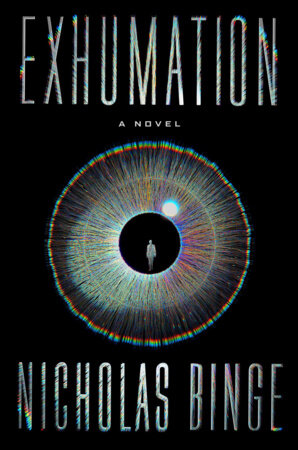
By Nicholas Binge
- Publisher: Riverhead Books
- Release Date: December 1, 2026
- Format: Hardcover / eBook / Audiobook
- ISBN: 979-8217179183
- Goodreads: Exhumation By Nicholas Binge
Arlo Abbas is a Noir PI archetype. A burned ex-cop with an ex-girlfriend who hates his guts, people on the force at Scotland Yard who owe him a shrinking number of favors, a lot of self-loathing, and a bank account that’s been gasping for months… until suddenly it’s got a hefty balance and Arlo finds a note in his mail telling him to find a girl. A girl the police say was murdered months ago.
Unraveling Arlo’s descent is as much the story as finding out whatever happened to Sophie Banik, and weirdness surrounds both of them like a London fog.
Exhumation gives us a collision between science and supernatural horror. As Arlo digs into the case, he finds the notes from a researcher working on a sleep deprivation disorder where the dreamless are seeing the same visions in trances that pull them in. Though darker than either, there’s a bit of a Charles Stross Laundry Files vibe, where mathematics opens a gate to Cthulhian horrors, or Stranger Things portals to the Upside Down, and Fringe science underlies it all. A major difference between all of those tales and this is how damaged the players are… they’re pretty much Slow Horses damaged, to be fair. Arlo, a rational investigator, is as torn as the scientist whose journal he’s discovered, and both feel the weirdness and pull of the supernatural. The real mystery is who gets sucked into this vortex and who, if anyone, escapes it, or even what escape means.
Pity this couldn’t have come out last month, when ghosts and demons walked the streets. Brilliant writing, chilling reading…and if Nicholas Binge happens to read this…no, I didn’t see it coming.
 The Shift (The Pollux Series, Book 1)
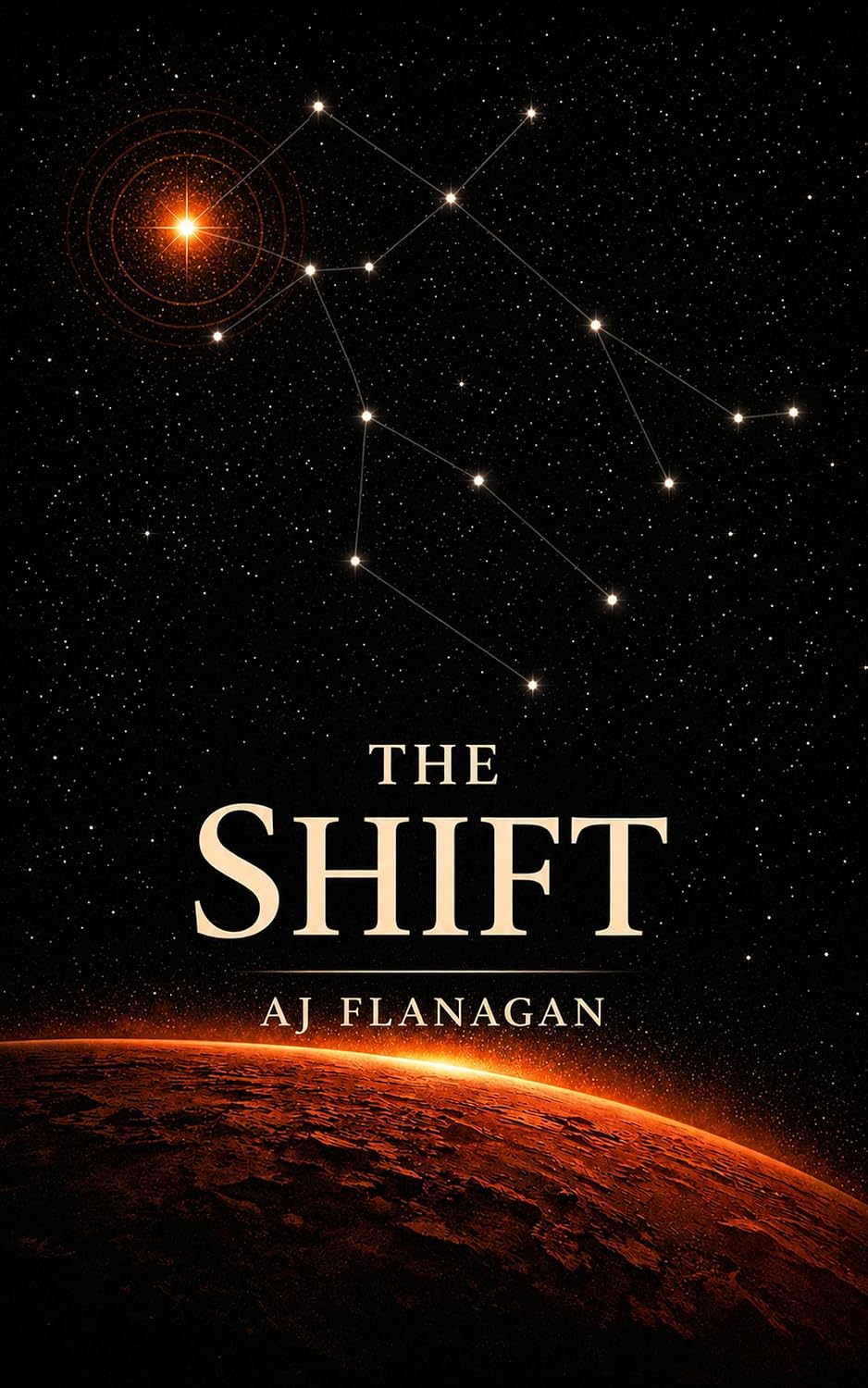
By A.J. Flanagan
- Publisher: Independent / KDP Select
- Release Date: December 1, 2026
- Format: Paperback / eBook (Kindle Unlimited)
- ISBN: 979-8178418475
- Goodreads:The Shift (The Pollux Series, Book 1) By A.J. Flanagan
An alien probe 33.7 light-years from Earth detects a man-made nuclear explosion on our little planet, digs into its signal processing chops, and decides that we meet the criteria for extinction. But, against its programming’s better judgment, it offers an out: evacuate the premises by a given due date. The cryptic message arrives in 2012, and the eviction notice is marked for 2046. So humanity—or the very small group of people read in on the impending ELE—rolls up their sleeves and starts fast-tracking a Mars colony for 17,000 people, which is all they figure can be moved, housed, and provided for in the time they have. The prime mover is SpaceOrg, a SpaceX-type megacorp, and it goes about hoovering up experts and running full tilt.
The head of SpaceOrg knows just the guy to be the project lead: Rainer Vestry, a can-do fix-it guy he plucks from Antarctica to work on the project via a traditional fast (space) plane, rushing him from the ice cap to Texas and dumping him right in the middle of the mess.
Along the way, the impending ELE is hidden from humanity, and anyone likely to figure things out winds up disappearing as well. Are they dead, alive and co-opted, or just in a dark hole somewhere? Though the world’s governments have agreed to work together, you can guess how well that works out, providing for lots of interesting side plots along with a very credible Kim Stanley Robinson / Andy Weir-style Mars colonization effort.
Extinction Level Event (ELE) Exodus stories have a rich history in science fiction, going back at least as far as Philip Wylie and Edwin Balmer’s When Worlds Collide (1933) to Neal Stephenson’s Seveneves (2015). The Shift, A.J. Flanagan’s debut effort, echoes both of those, as well as Kim Stanley Robinson’s Mars Trilogy and Andy Weir’s Project Hail Mary. The alien probe, whether it knows it or not, owes its origins to Robert Wise’s classic, The Day the Earth Stood Still (1951), and it does it proud.
Flanagan’s debut gets richer and deeper as it goes along, and his take on global politics is just as keen as his knowledge of orbital dynamics. The Shift is a heavy, hard sci-fi tour de force, and it’s just the beginning of what looks like a trilogy to me. If you like big idea hard SF, jump in.
 Cygnus (Frontlines: Evolution, Book 3)
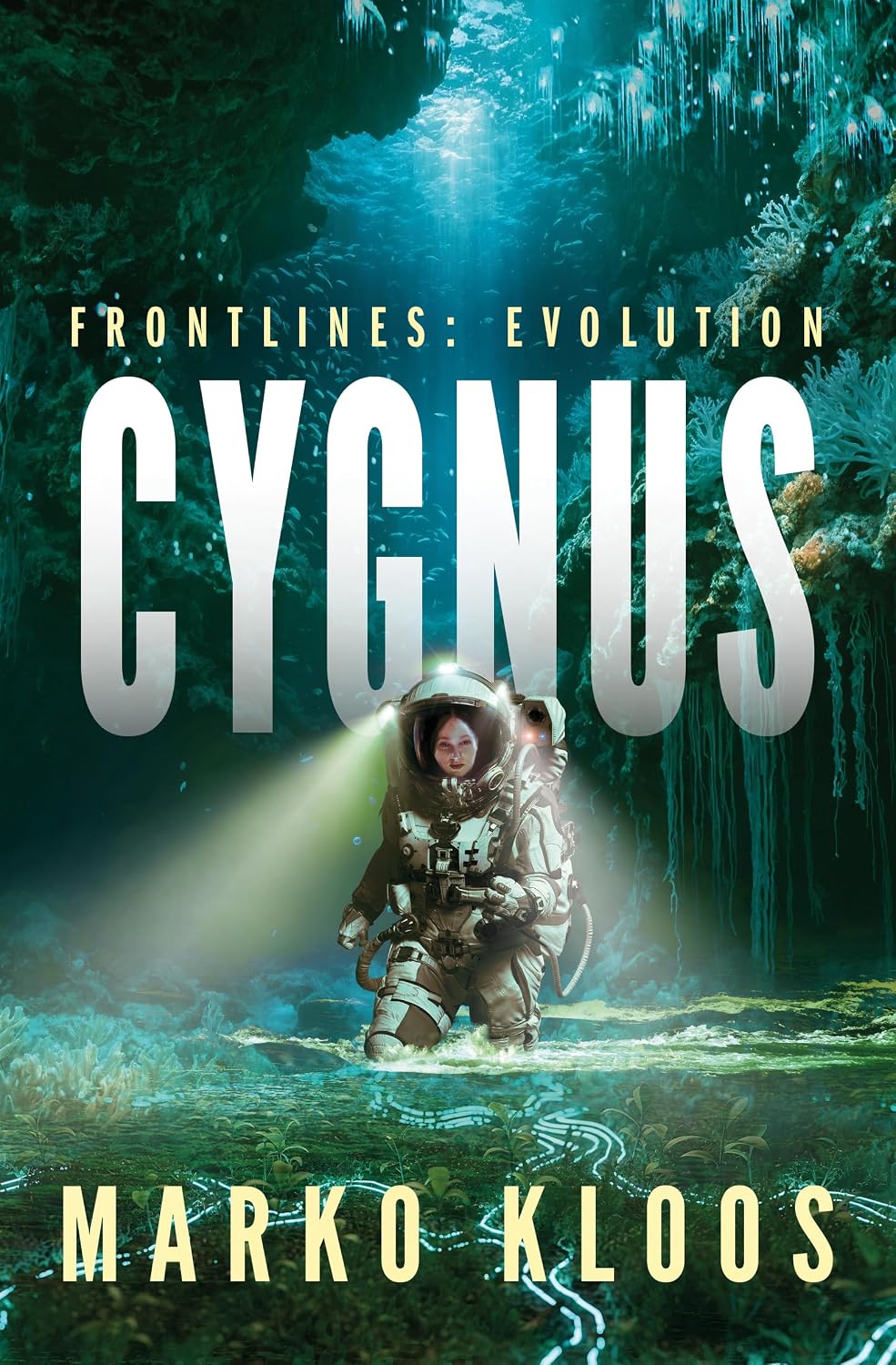
By Marko Kloos
- Publisher: 47North
- Release Date: December 8, 2026
- Format: Paperback / eBook / Audiobook
- ISBN: 978-1662535833
- Goodreads: Cygnus (Frontlines: Evolution, Book 3) By Marko Kloos
I rarely review series installments unless they’re the first or last, but Cygnus is billed as the conclusion to Marko Kloos’s Frontlines: Evolution series, so…sure. I’ve been a Kloos fan since his debut, Terms of Enlistment. While the original series followed Andrew Grayson (who makes a welcome mentoring cameo here as a Lt. Col.), Evolution centers on Corporal Alex Archer.
A survivor of a Fallout-style vault, Alex is now in an elite Spec Ops unit. The plot largely consists of her team sneaking into subterranean Lanky burrows to nuke their “seed ships,” culminating in a dangerous mission to rescue another trapped squad. Fortunately, she is teamed with Apollo, a heavily armored K9 who actually provides the bulk of the story’s human interest. You can shoot up soldiers all day long, but a dog in danger? You’ve got me on tenterhooks.
It’s a decent read, but climbing into tunnels to fight these Big Dumb Aliens has gotten repetitive. More importantly, despite the publisher’s claims, Cygnus never offers a resolution, either to the war with the aliens or Alex’s character, who is simply positioned for more adventures. Ironically, the blasts from the nukes Alex’s team keeps planting are pretty much contained underground, hiding the drama of thermonuclear destruction. It’s the same with the book itself. While a solid military SF procedural, the “explosive conclusion” promised on the cover comes off as more of a muffled thump.
 Looking Backwards: The Forever War
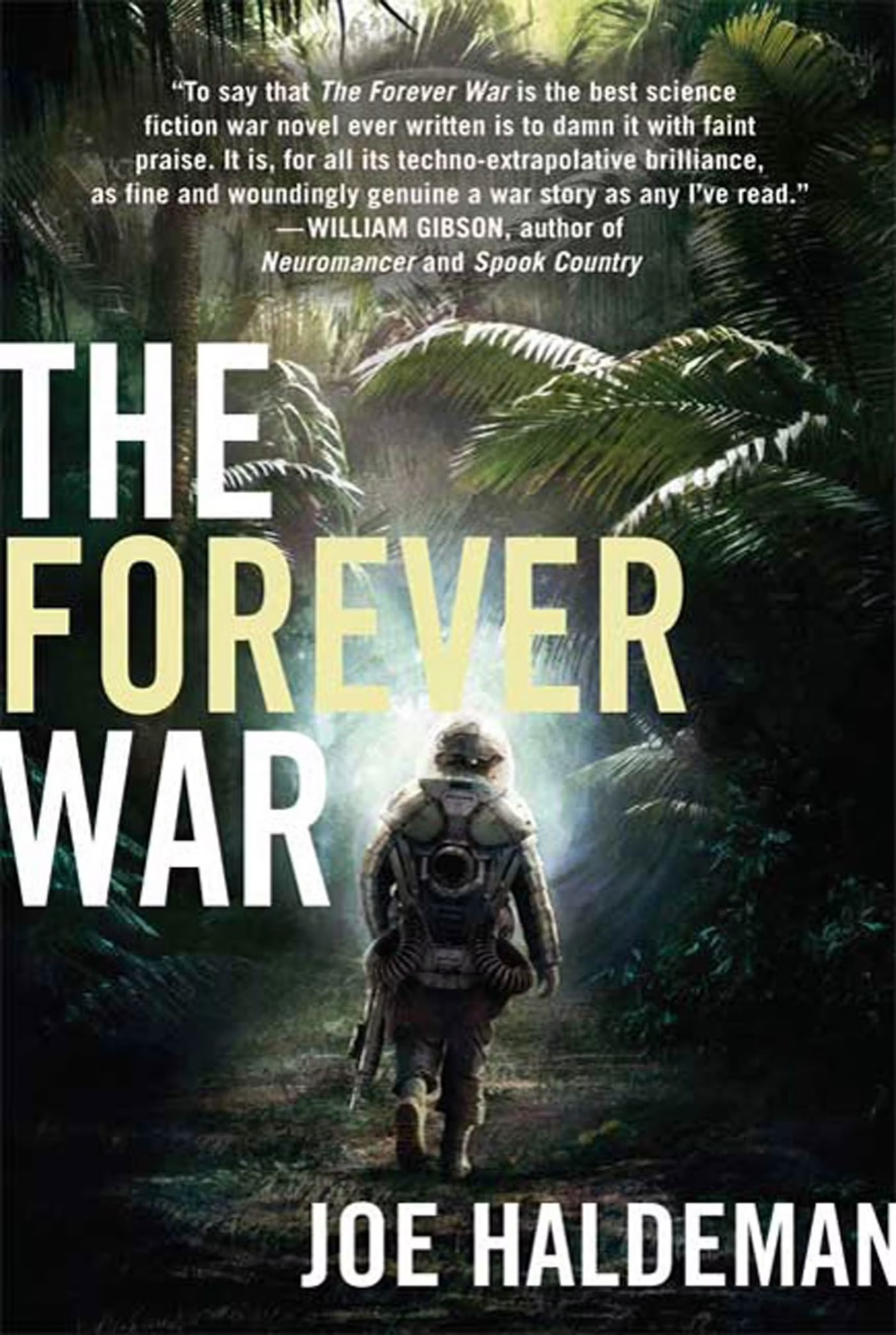
By Joe Haldeman
- Publisher: St. Martin’s Press (Original)
- Release Date: December 1974 (Original)
- Format: Hardcover / Paperback / eBook / Audiobook
- ISBN: 978-0312536633
- Awards: Nebula, Hugo, Locus Awards
- Goodreads: The Forever War By Joe Haldeman
I thought it would be fun to look back in time and see what important books had been written in previous Decembers, and though the month is often shunned by publishers, two of the most important pieces of Mil-SF, both Hugo winners, were published in the dark of winter: Heinlein’s Starship Troopers (1959) and Joe Haldeman’s The Forever War (1974). Both books were published just after a major conflict, and both written by writers that had served in the wartime military. Though The Forever War can stand on its own, and I contend that it still reads like a contemporary novel, it’s also clearly in conversation with Heinlein’s book, which lauded a military ethos. Little surprise that it remained on the Marine Corps Reading list for 31 years (1989-2020).
While Heinlein served in WWII as a naval officer, Haldeman was a combat engineer in Vietnam, a war fought with questionable moral authority by troops with little support back home. In John Prine’s song, “Hello in There,” his comment, “We lost Davy in the Korean War, still don’t know what for,” shows that the cracks in the pro-war public were there before the conflict. In fact, those cracks were the impetus for Heinlein’s war novel, despite its WWII aesthetic, with space paratroopers and starship battleships.
Haldeman brought the grim reality of smart soldiers trapped in a stupid war home because he’d been there and knew that you don’t win wars, you just endure them.
As hard science fiction, The Forever War has some solid themes going, dealing with the time dilation you get fighting an interstellar war without a magical FTL drive. His characters wind up stranded through time, coming back from deployments completely out of sync with the world they return to, the Vietnam soldier’s plight writ large. His idea of a relativistic shuttle at the end so that veterans can hope to see comrades return across the upcoming centuries is a brilliant and poignant touch.
As I said before, I think The Forever War could stand on its own if it was published today. It faced gender issues head-on, pulled no punches about the glory of war, and Haldeman’s characters and writing are top-notch.